



“The only way I could recognize her body was by a necklace,” Jamila Afelom recounted about her daughter, Fatin Ben Homar Azizi. “I had given it to her just before she departed.”
Afelom discovered her daughter’s remains in a hospital a day and a half after Fatin attempted to swim to the Spanish enclave of Ceuta from Morocco.
During a video interview with CBC News earlier this month from the northern Moroccan city of Tétouan, approximately 40 kilometers from Ceuta, Afelom frequently turned her gaze away from the camera. Occasionally, her voice faltered, and she shielded her face with her hands as she reminisced about that fateful day in late July.
“People I knew witnessed Fatin’s body being retrieved from the sea,” she recalled. “The shock is something I will never forget.”
-
‘Absolute chaos’ as thousands of Moroccan migrants breach Spain’s Ceuta border
-
Morocco arrests 111 migrants headed to Spain’s Ceuta as sides step up crackdown
Afelom characterized her 26-year-old daughter as bold, determined, and somewhat boyish.
“She frequently skipped school, leaving her backpack behind to play football instead,” she shared.
Soccer was Fatin’s greatest love. Coach Adel El Kaab of Moghreb Athletic Tétouan, a team competing in Morocco’s premier league, had known her since childhood. She trained with him for several years before transferring to another Tétouan club, Moghreb Atletico Tanger, this past winter.
“She was like a younger sister to me. I miss her dearly,” stated El Kaab, who is compensated for coaching men’s teams yet volunteers his time for women’s teams.
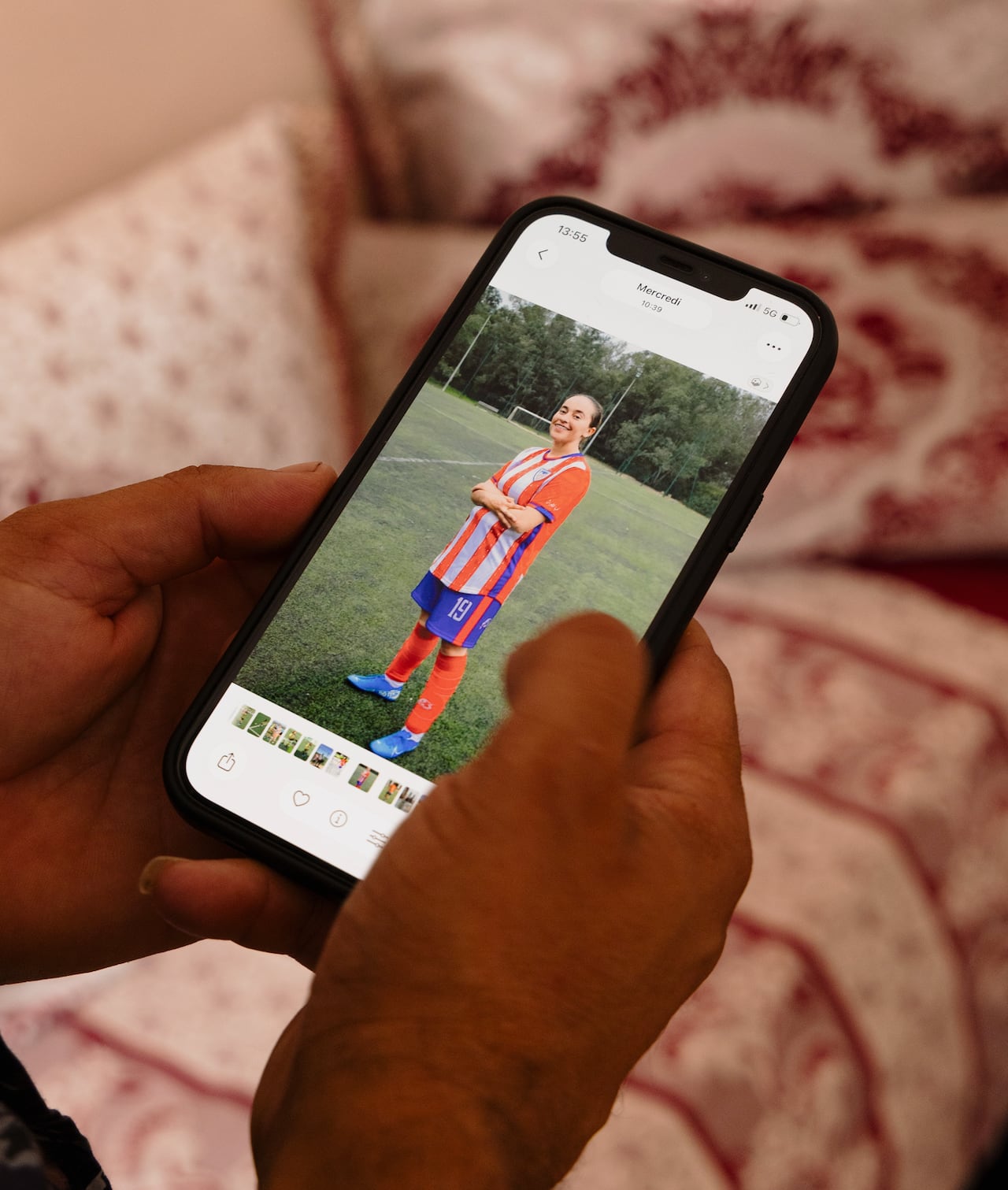
Jawad displays an older photo of his sister Fatin on his phone. (Myriam Meloni)
El Kaab expressed to CBC News that “football serves as a refuge for these girls,” especially as many contend with challenging economic circumstances.
Despite his efforts to caution his players about the perils of irregular migration routes, numerous girls he coached departed during the last significant migration wave, seeking a brighter future in Europe.
“Two have returned, but around eight girls are still in Ceuta,” he noted.
“I advise the girls: ‘Don’t rush into anything. Your lives are invaluable.’
Attempting to prevent her daughter’s journey
Afelom, a single mother, works at a cemetery in Tétouan, where she tends to graves and sells small items like water bottles, basil, and other herbs. In Islam, basil represents the fragrances awaiting believers in paradise.
Fatin assisted her mother at the cemetery.
“Together, we earned about 500 dirhams [around $75 CAD] weekly,” Afelom stated, emphasizing their shared effort.
Fatin’s father, a pastry chef, passed away from lung disease when she was only 10, leaving Afelom to care for four children. She later remarried and had another daughter, but the father abandoned the family.
“Our government does not support us. There are no jobs, no medical care. There is absolutely nothing,” Afelom lamented.
Fatin once confided in her, “I want to do everything possible to go to Europe and rescue you from this poverty. I would rather plunge into the sea than remain impoverished and have nothing.” Fatin had previously attempted to reach Ceuta.
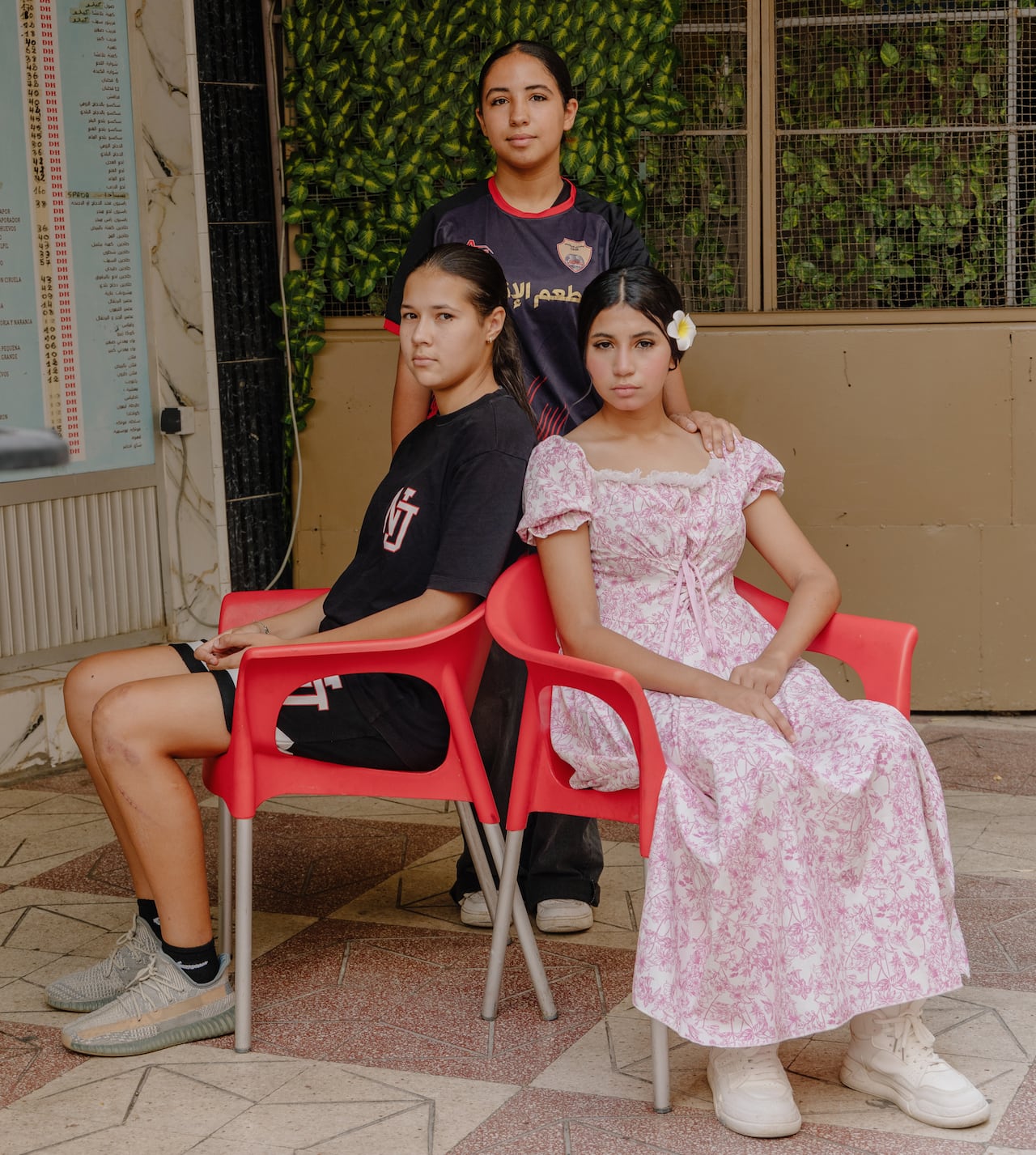
Fatima A., standing, Rawia, sitting left, and Fatima E., sitting right, were friends and teammates of Fatin Ben Homar Azizi. Fatima E. went with Fatin to Ceuta but lost her en route. (Myriam Meloni)
At the end of July, an estimated 80,000 Moroccans and migrants from further south flocked to the northern border town of Fnideq, aiming to cross into Ceuta. Many view this as a route to residency in Europe.
Upon learning of the situation at the border, Afelom stated she “rushed home to check on my children.”
She attempted to dissuade Fatin from going. However, her eldest daughter was resolute.
“She told me, ‘You already stopped me once. So don’t tell me I have to remain. My friends went last time, and now they have papers and a good future.’
Fatin’s brother Montasir, aged 32, and her 14-year-old sister Amira also headed to the border. When Fatin arrived, she contacted her mother.
“Mom, it’s so crowded. I’m scared I’ll be crushed by the mob.” Afelom urged her to return home, and Fatin agreed.
But then she informed her mother that she would proceed with crossing after all. “You really don’t need to worry, Mom.”
Later, Fatin called again.
“It’s okay, I’m just going to cross. If I don’t answer, it means my phone has died. You really don’t need to worry, Mom.”
That was the last time Afelom heard from her daughter.
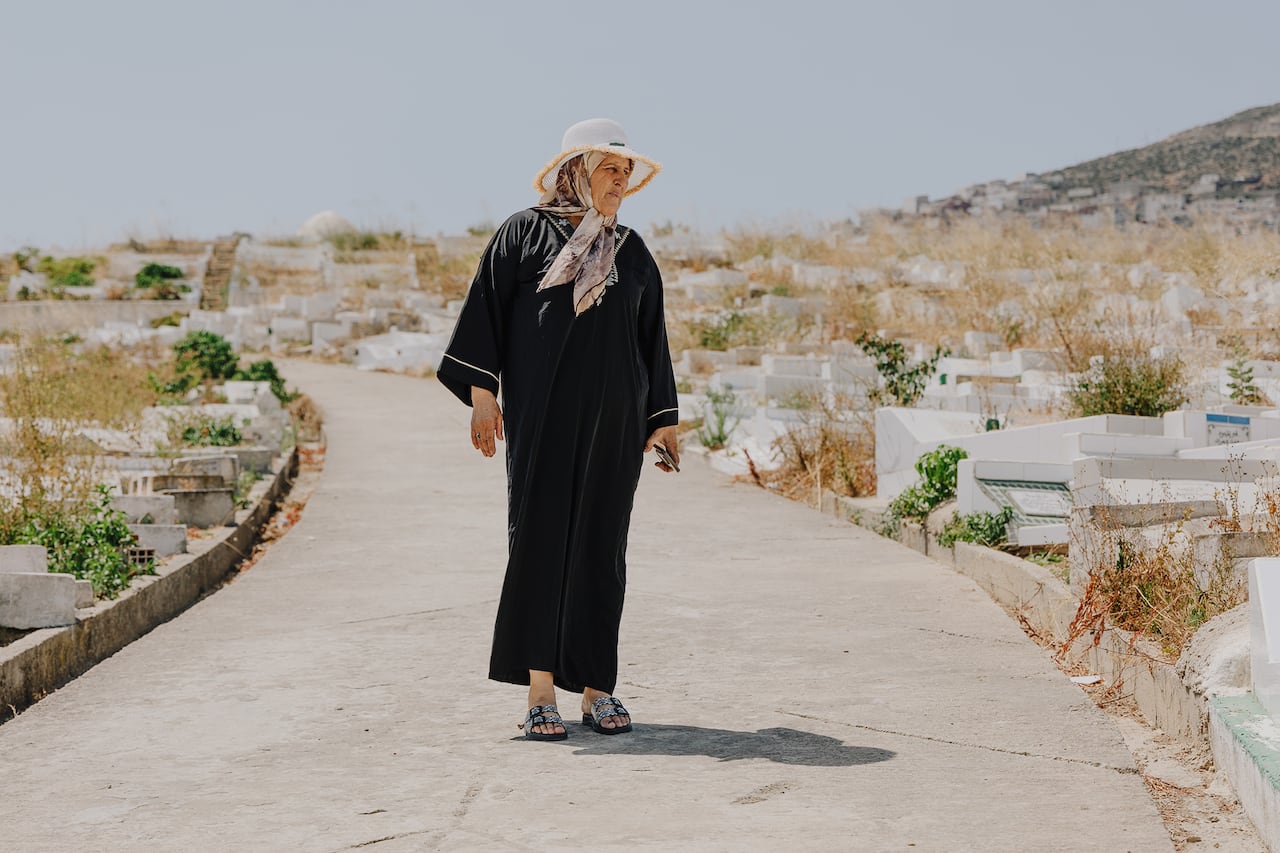
Jamila Afelom visits her daughter Fatin’s grave in the Tétouan cemetery, Morocco. (Myriam Meloni)
Aspirations for a new life
“Fatin ventured quite far into the sea,” said her friend and teammate Fatima, 15, who was also attempting to cross into Ceuta that day. In the ensuing chaos, Fatima lost sight of Fatin.
It was only after Fatima and the other girls returned to Tétouan from Ceuta that they learned of Fatin’s death. “We were heartbroken.”
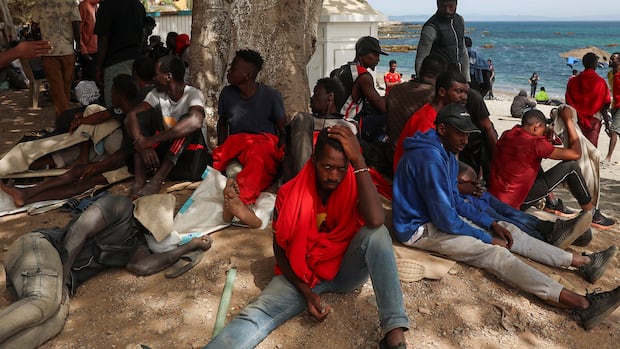
Approximately 2,000 migrants remain in the Spanish enclave of Ceuta after 70,000 surged into the autonomous city last week, overwhelming humanitarian organizations.
Fatin’s family initiated a search, moving between hospitals and police stations. After a day and a half, they found her remains in a hospital located in the border town of Fnideq.
The Moroccan human rights group AMDH informed CBC that at least 141 individuals lost their lives attempting to reach Ceuta at the end of July.
AMDH reported that numerous bodies remain unidentified in Ceuta’s morgues, while some victims have already been buried without identification as families continue searching for their missing loved ones. AMDH is urging the authorities in Ceuta to cease further burials and is calling upon Moroccan officials to intervene diplomatically to ensure victims are identified, their remains returned to Morocco, and their families can receive and lay them to rest with dignity.
Fatin was laid to rest on August 1 at the cemetery where she had worked alongside her mother just days prior.
According to her coach El Kaab, many young Moroccans view migration as “a means of escaping the harsh realities they face.”
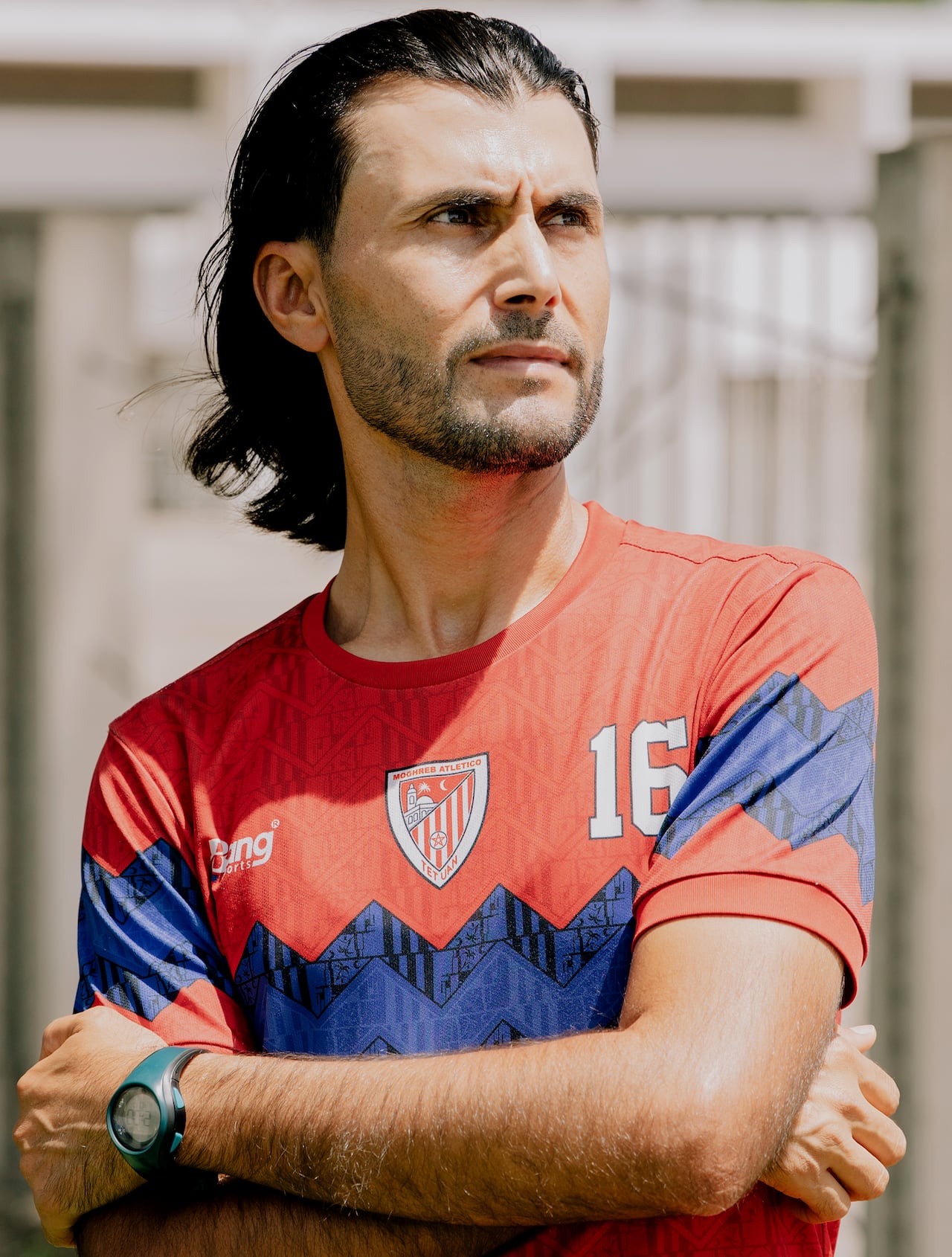
Adel El Kaab was one of Fatin’s soccer coaches. (Myriam Meloni)
Youth unemployment in Morocco hovers around 36 percent, according to data from the pan-African research organization Afrobarometer.
“Some young girls are even taken advantage of,” El Kaab noted.
He observes how social media and tales from migrants shape perceptions of Europe among Moroccans.
“They aspire to alter their financial situations. This dream is not limited to girls; boys share it too.”
He is aware of 17 boys from his club who have migrated.
“We strive to educate players about the risks involved,” he mentioned. Regrettably, this latest influx into Ceuta “occurred too rapidly.”
Children in Ceuta
“It pains me deeply. Every moment, my heart aches,” Afelom expressed, mourning her daughter while worrying about the two children who survived the journey to Ceuta.
As per Spain’s Ministry of the Interior, 2,500 minors continue to reside in Ceuta.
“My 14-year-old daughter is in Ceuta, lost and alone. The last sighting was of her running through the streets of Ceuta with bloody feet,” Afelom shared.
She occasionally manages to reach her children, but their demeanor is bleak.
“My daughter tells me, ‘If I return to Morocco, I will harm myself. I have no father, no sister, nothing,'” Afelom recounted during a CBC interview on August 9.
On August 24, Fatin’s brother Jawad informed CBC that his 14-year-old sister Amira had since returned to their family in Tétouan.
Afelom stated that Fatin’s ultimate desire was to lift her out of poverty.
“But my poor girl never had the opportunity to fulfill that dream.”
A version of this story appeared in the Dutch publication NRC and the Belgian publication De Standaard.