



King Harald of Norway, a progressive leader who carved out his own identity over three decades, stepped out from the shadow of his charismatic father, has passed away at the age of 89, as announced by the royal palace on Friday amidst several challenges facing the Norwegian royal family.
“King Harald died peacefully at Oslo University Hospital on Friday, August 28, at 0635 (local time, 0435 GMT),” the royal palace stated on its official website.
As Europe’s longest-serving monarch, Harald was admitted to the hospital on August 17 for treatment of a bacterial infection in his bloodstream.
In 2024, he had experienced a health scare while vacationing in Malaysia, where he was treated for an infection and received a temporary pacemaker. He was subsequently transported back to Norway by the military and later had a permanent device implanted.
In 2024, Harald, who had served as Norway’s ceremonial head since 1991, announced plans to limit his official engagements but firmly rejected any thoughts of abdication, affirming that his commitment as king was lifelong.
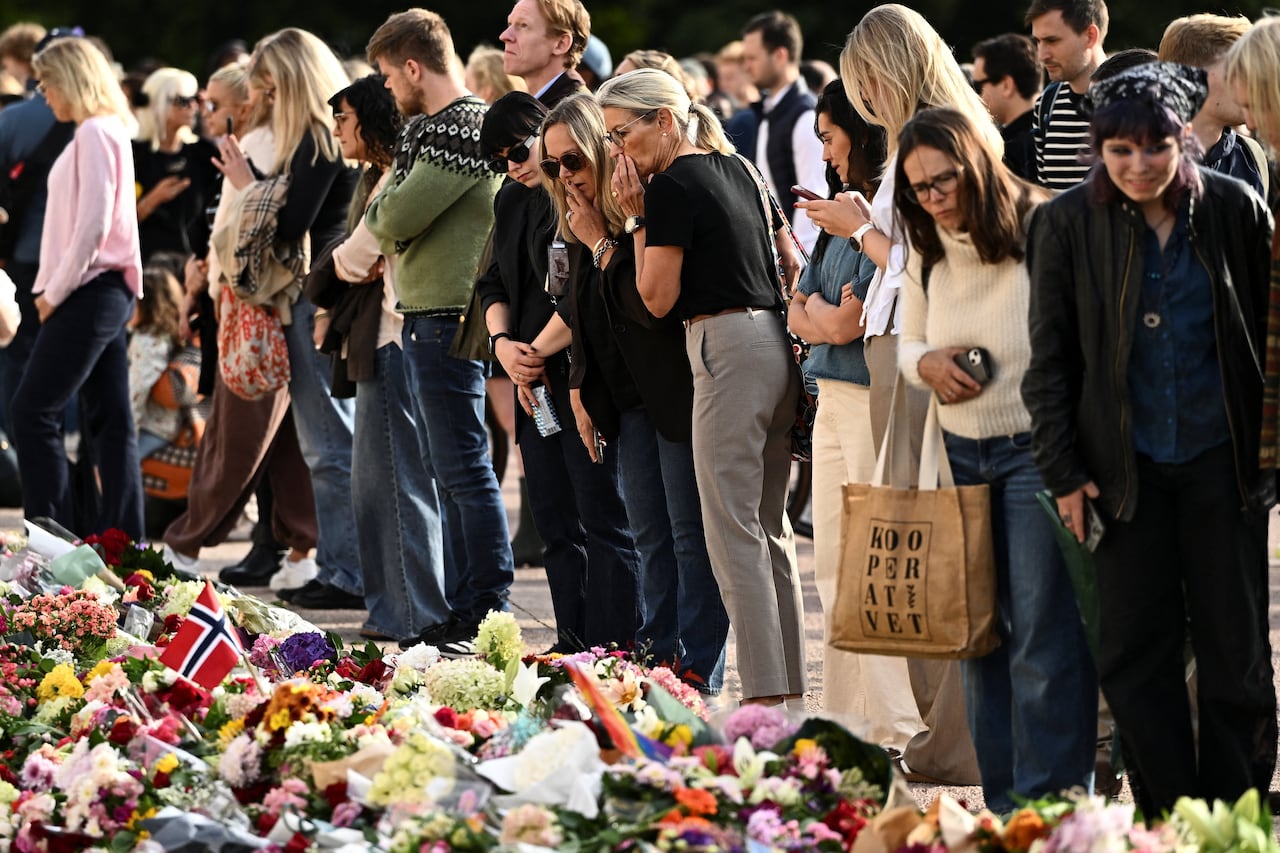
Mourners gather outside the Royal Palace in Oslo following the passing of King Harald of Norway on Friday morning. (Dylan Martinez/Reuters)
“King Harald dedicated his life to Norway,” said Prime Minister Mark Carney in a statement that emphasized Harald’s ties to Canada.
During his exile in wartime, Harald visited Toronto and Little Norway, the training ground for Norwegian soldiers in Canada, according to Carney. The King had returned for a state visit in 2002, touring Ontario, Newfoundland and Labrador, and Nova Scotia.
Last year, Carney met with Harald in Oslo, where the King spoke fondly of the connections between the two nations.
“On behalf of the Government of Canada, I extend my heartfelt condolences to Queen Sonja, the Royal Family, and the people of Norway. Canada shares in your grief.”
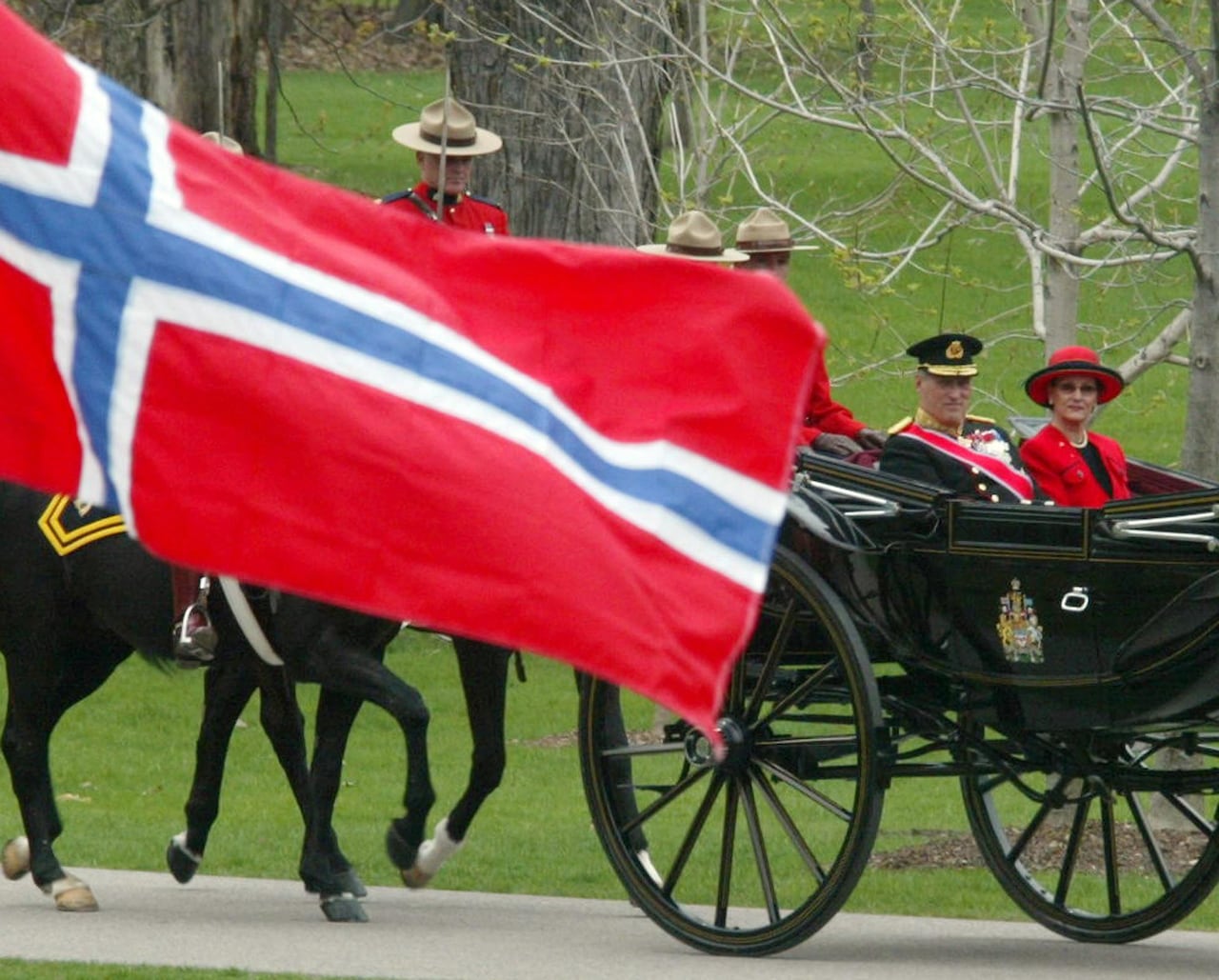
King Harald V and Queen Sonja arrive in a landau at Rideau Hall in Ottawa on May 6, 2002, during their state visit to Canada. (Jonathan Hayward/The Canadian Press)
Challenging times for the royal family
The timing of Harald’s death coincides with a period of turmoil for the royal family.
Crown Princess Mette-Marit, married to Harald’s son Crown Prince Haakon, is under heavy scrutiny for her past friendship with the late sex offender Jeffrey Epstein, a connection for which she has expressed remorse.
Her son Marius Hoiby, from a previous relationship, was convicted in June on two counts of rape and one count of domestic violence, receiving a four-year prison sentence following a seven-week trial. Both he and the prosecution have appealed the ruling.
-
Norway crown princess’s son sentenced to 4 years in prison after rape conviction
-
Son of Norway’s crown princess arrested days before his rape trial set to begin
Two days following Marius’ conviction, the palace announced that Mette-Marit had successfully undergone a lung transplant, though details about the timing of the surgery were not shared.
After a period of recovery in the hospital, she returned home and celebrated her silver wedding anniversary with Haakon in August.
Support for the monarchy saw a decline, dropping to 60 percent in February 2026 from 70 percent the previous month, according to a poll by Norstat published by NRK, although it slightly increased to 64 percent in May.
Throughout his reign, Harald maintained a strong connection with the Norwegian people. The February poll indicated he was regarded as the royal family member who most embodied the essence of the monarchy, scoring 9.2 on a scale of 1 to 10.
Descendant of Queen Victoria
A descendant of Queen Victoria of Britain, Harald ascended to the throne in 1991 and gradually infused modern elements into a ceremonial role that had largely been seen as a symbol of national independence.
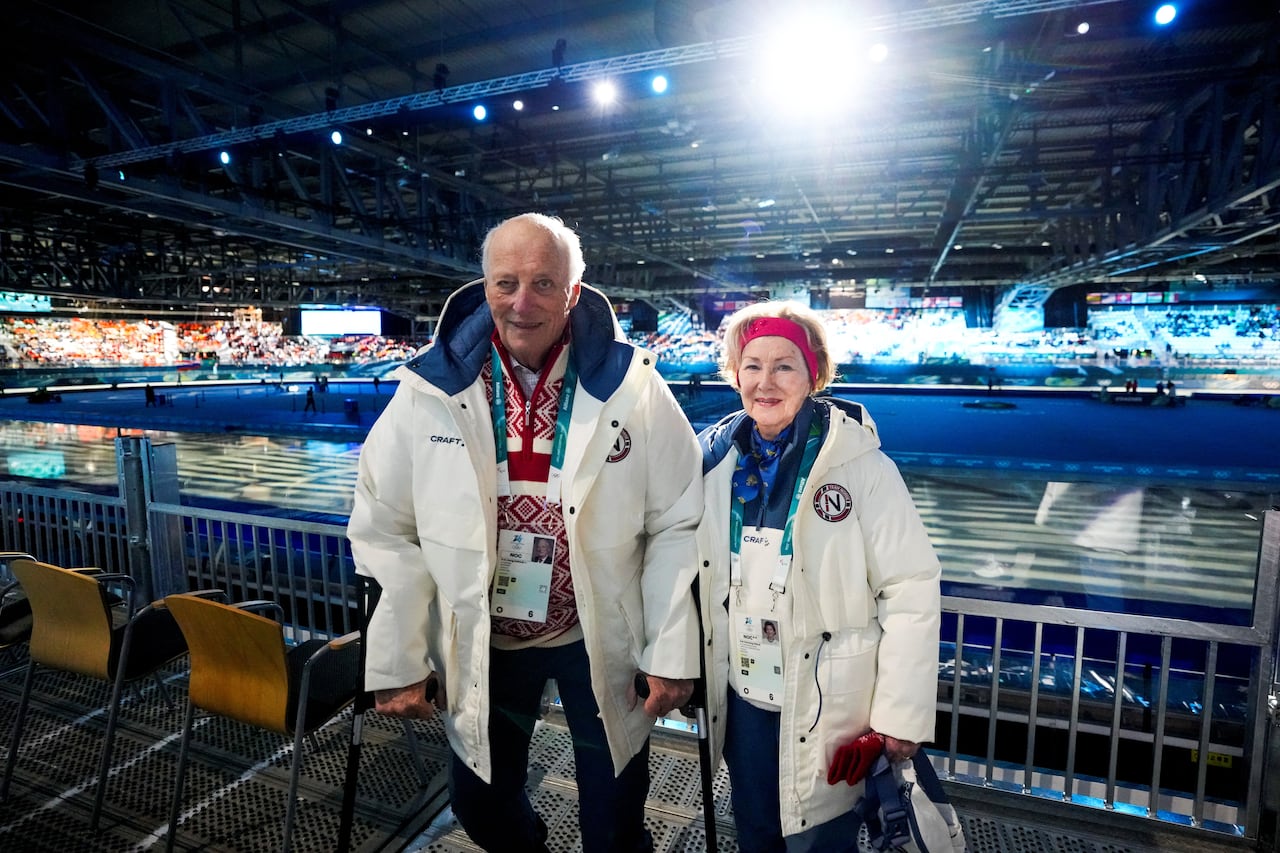
King Harald and Queen Sonja of Norway at the Milano Speed Skating Stadium during the Milano-Cortina 2026 Winter Olympics in Milan, Italy, in February 2026. (NTB/Heiko Junge/Reuters)
The beloved king played a vital role in comforting the nation during times of sorrow.
In the wake of the tragic events when far-right extremist Anders Behring Breivik claimed 77 lives in 2011, Harald addressed the country with a heartfelt televised message, saying that “freedom is stronger than fear.”
After natural disasters such as floods and storms, he would visit affected areas, donning rubber boots and a well-worn coat to meet those who suffered losses.
Advocate for openness
In his later years, he championed the cause of acceptance, stating in a 2016 address that Norwegians could come from diverse backgrounds, hold different beliefs, and have various sexual orientations.
In November 2005, Harald and his wife, Sonja Haraldsen, hosted a ball for 550 Norwegians to mark the 100th anniversary of the country’s independence from Sweden.
Harald remarked during an interview at the time that Europe’s royal families should resist the temptation to retreat into isolation and should embrace transparency.
“Once you’ve opened the gate, it’s quite challenging to close it again,” he told Reuters. “I’m not sure I would want to close it. So far, so good, from my perspective.”