



Several U.S. lawmakers urged Donald Trump to bring the ongoing conflict with Iran to an end as it marked six months on Friday. The president, however, has sent mixed messages about the situation of the war.
Trump stated that the military’s offensive actions and the blockade of the Strait of Hormuz have allowed the U.S. to meet its goals. On social media earlier this week, he posted a message that read “MISSION ACCOMPLISHED 2026,” accompanied by AI-generated images featuring the face of Iranian supreme leader Ayatollah Ali Khamenei, who was killed on February 28 when the U.S. and Israel initiated airstrikes to commence the war.
In recent weeks, Tehran and Washington have primarily exchanged aggressive statements, leaving diplomatic efforts to third parties. This week, Trump appeared more publicly focused on his frustration over Canada canceling trade negotiations.
It is anticipated that the U.S. president will increasingly direct his focus toward the midterm elections on November 3, where he has been actively involved in attempts to sway voting outcomes, while also preparing for a unique mini-convention for Republicans in two weeks.
Rep. Adam Smith from Washington, the leading Democrat on the House Armed Services Committee, issued a statement on Friday addressing numerous significant issues stemming from the war, with a particular focus on the impact on military personnel.
“The casualties keep rising, including 19 American service members killed and over 750 injured, while thousands of innocent civilians have lost their lives across the region,” Smith remarked. “Tens of billions of taxpayer dollars are being squandered, driving up the costs of gasoline, utilities, and groceries at home and straining economies worldwide.”
‘More costly and more unstable’
The U.S. and Israel have eliminated several of Iran’s senior religious, military, and political figures, while Khamenei’s successor, his son Mojtaba, has reportedly been injured and has not appeared in public since the war began.
Additionally, it has been reported that the price of rice has surged approximately 60 percent since the war commenced, while beef prices have risen by 150 percent for Iranians, who are also facing long wait times to refuel their vehicles. The International Monetary Fund predicts that Iran’s GDP will shrink by over 5 percent this year.
However, the U.S. has also experienced costs beyond the financial implications of Operation Epic Fury, including Trump’s declining approval ratings in various polls and increased gas prices for many Americans due to disruptions in oil markets. The conflict has also put a strain on relations between the White House and allies in Europe, the Middle East, and Asia, as Trump has expressed frustration about their lack of support for the U.S. in the war.
-
Trump orders reduction of joint military exercises with South Korea
-
Trump threatens to bomb Oman if it ‘interferes’ with Iran
Brett Bruen, a former U.S. diplomat now working with the public affairs agency Global Situation Room in D.C., stated to CBC News on Friday that Trump “has made the world more expensive and more unstable.”
Iran managed to find leverage following the initial shock of U.S. airstrikes through its own drone operations and by mining the crucial Strait of Hormuz. This action deterred commercial vessels from nations not aligned with the regime from traveling through the strait, a significant route for oil and liquefied natural gas shipments.
In response, the U.S. initiated its own naval blockade to restrict ship movements to Iranian ports. Trump has repeatedly claimed that the strait remains open, including statements made this week, but ship-tracking services estimate that traffic is currently at only about 5 percent to 15 percent of pre-war levels.
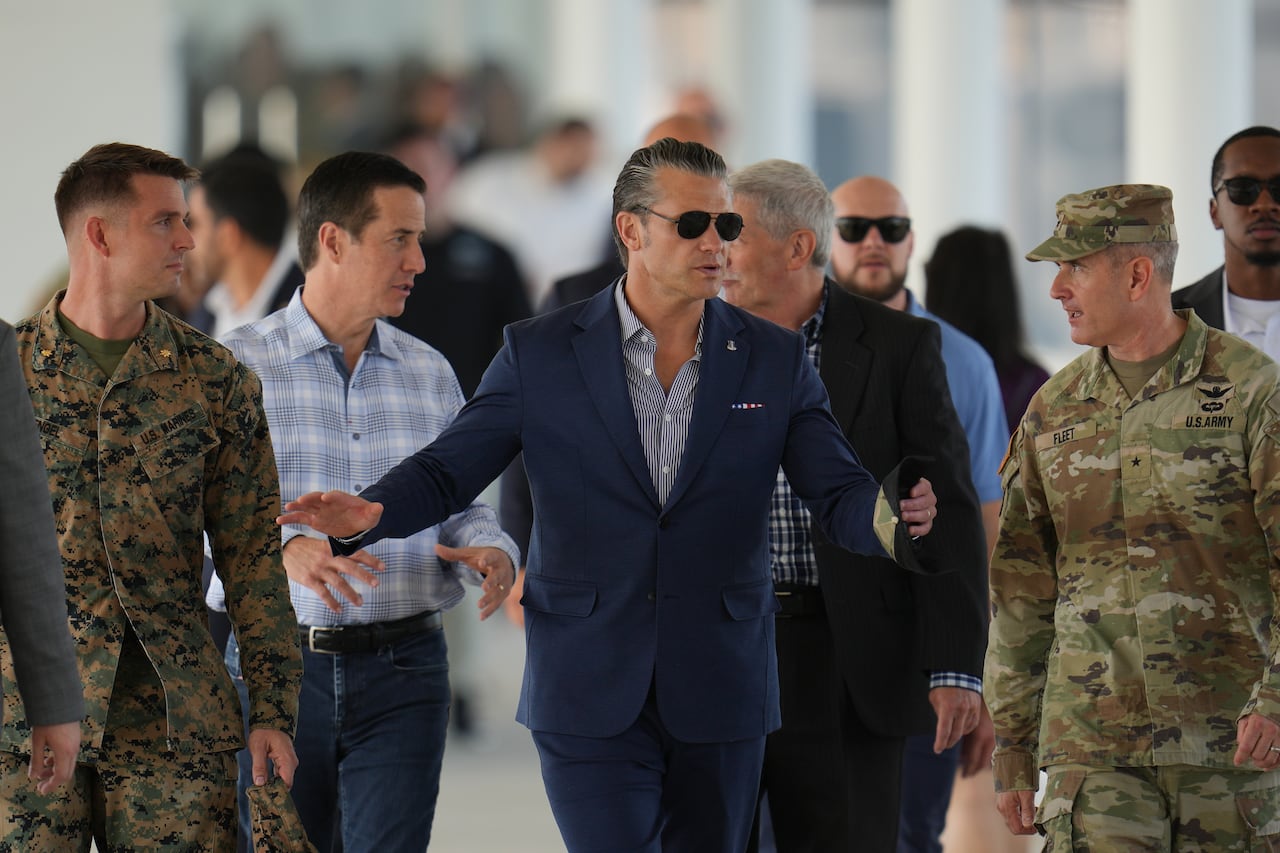
U.S. Defence Secretary Pete Hegseth is seen attending military exercises in Panama City, Panama, on August 13. Hegseth estimated in July that the Iran war has cost the U.S. $37 billion. (Matias Delacroix/The Associated Press)
Earlier this week, Democrats demanded greater transparency regarding the war’s expenses. In July, Defence Secretary Pete Hegseth informed a congressional committee that the military operations had incurred costs of $37.5 billion US. However, some opposition members and think tanks argue that this figure underrepresents the true costs, considering the missile systems and munitions the U.S. has deployed this year, which are leading to diminished stockpiles.
“Pete Hegseth should be dismissed, the war needs to conclude, and taxpayer funds ought to be allocated to making life more affordable,” House Minority Leader Hakeem Jeffries from New York asserted on social media on Friday.
Few Republicans have voiced opposition to the war itself, although some have criticized specific military tactics. An exception is Rep. Thomas Massie from Kentucky, who generally stands against U.S. military interventions abroad.
“The 1973 War Powers Act mandated that Trump withdraw forces within 90 days without Congressional authorization,” he stated on Friday. “[The administration] absurdly claimed to end the war and then reignite hostilities at 91 days. We are now past 180 days. End the War.”

Some embassy staff in region reportedly set to return
This week, Trump mentioned that he is “not in a rush” to bring Iran back to the negotiating table. This marks a notable shift from his messaging throughout much of the summer, during which he emphasized the necessity of reaching an agreement with Iran to prevent it from acquiring a nuclear weapon.
Currently, there are no negotiations taking place, nor is there an indication that a renewed military offensive is imminent.
The administration has stated its focus is on economically suffocating Iran, even as Treasury Secretary Scott Bessent’s “Operation Economic Outcast,” launched on Monday, was heavy on warnings but light on specifics.
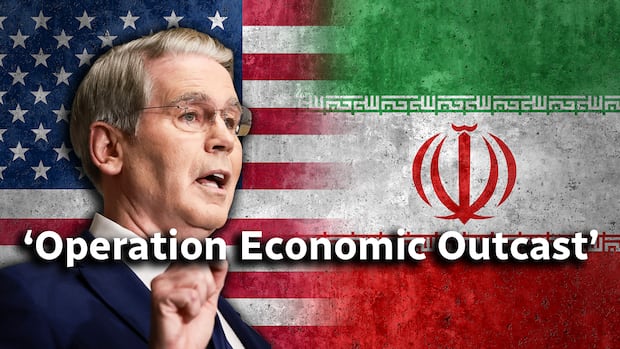
The Trump administration proclaimed ‘economic D-Day’ against Iran and cautioned global trade partners to sever all financial ties with Tehran or risk facing severe economic repercussions. Avneet Dhillon elaborates on this latest initiative to isolate Iran’s economy and the potential for secondary sanctions to lead to a confrontation with China.
(Photo credits: The Canadian Press, Reuters, Adobe Stock and Getty Images)
Additionally, Reuters reported this week that the Trump administration is preparing to send diplomatic staff back to certain missions in the Middle East that had been evacuated or reduced due to the conflict. Posts in Lebanon, Israel, Saudi Arabia, and Iraq are among those where personnel will return, although at less than full strength, according to two sources familiar with the situation.
Bruen informed CBC News that the administration missed a key opportunity to instigate change in Iran that would have been less costly, especially given the unprecedented level of domestic unrest and protests observed in January when demonstrators expressed their dissatisfaction with the regime’s corruption and economic conditions.
At that time, Trump assured Iranian protesters that “help is on the way,” yet by the following month, the U.S. had commenced its military operations alongside Israel.
Bruen, who previously served in Barack Obama’s administration, expressed skepticism about the future following the six-month milestone.
“It drags on without end. I don’t foresee an easy resolution in the near future,” he remarked. “I don’t believe the dynamics in the region will change significantly.”