



As the conflict in Ukraine reaches a critical juncture, a notable intelligence mission from the United States to Moscow this week has underscored a divided discussion among allies regarding Vladimir Putin’s potential next steps.
For several weeks, experts have theorized that Russia’s authoritarian president may have abandoned hope that U.S. President Donald Trump could pressure Ukraine into conceding to his extreme demands. Analysts suggest that Putin might now believe that his prolonged conflict with Ukraine can only be resolved by escalating military actions.
With Russia’s economic conditions deteriorating and the number of volunteers willing to fight in Ukraine declining, Putin may find himself with limited options.
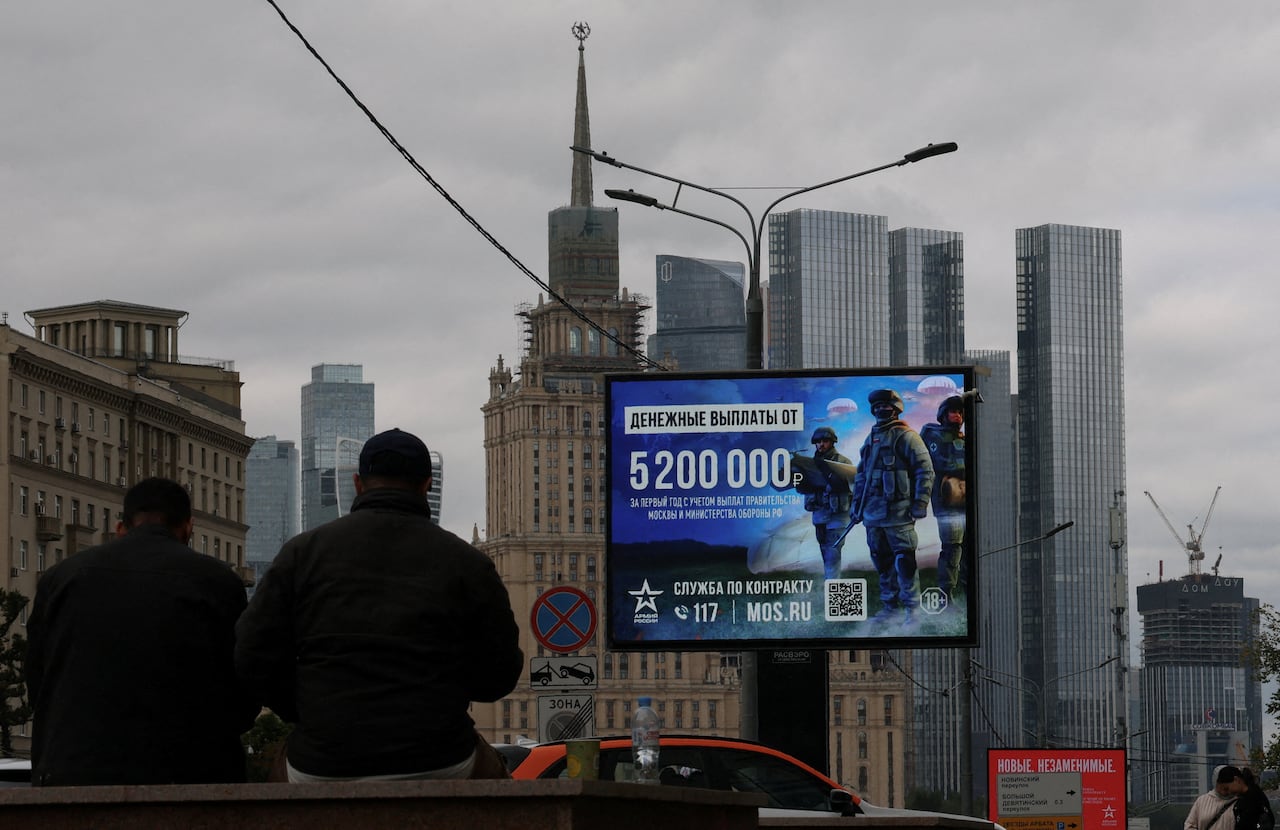
Men gather in front of a billboard advertising military service in downtown Moscow, Russia, on August 27, 2026. (Ramil Sitdikov/Reuters)
Ukrainian intelligence sources anticipate that he will soon launch an unpopular mass mobilization, likely sending hundreds of thousands of new conscripts into combat to overwhelm Ukraine’s stretched defenses.
Troops hailing from Russia’s less affluent areas have constituted a significant portion of the fighting force in Ukraine. A nationwide mobilization could incorporate men from wealthier urban regions.
Military analysts on both sides of the Atlantic have also cautioned that Putin might attempt to sow discord among Ukraine’s NATO supporters by orchestrating some form of provocation in Eastern Europe to create divisions within the alliance.
Recent presumed and confirmed hybrid attacks by Russia across Europe—including assassination attempts, sabotage, and increased drone incursions—have intensified significantly. However, strategists remain wary that Russia may be tempted to capture a portion of Russian-speaking territory in a neighboring nation to gauge the alliance’s reaction.
Russian officials have even suggested this week that they might target Western arms manufacturers supplying Ukraine, particularly those in Great Britain.
Unexpected Visit
The speculation surrounding Putin’s upcoming actions surged earlier this week following an unusual trip by CIA Director John Ratcliffe to Russia.
Rather than using a private jet, which is the typical method for secret diplomacy, Ratcliffe arrived at Vnukovo airport on a large, conspicuous U.S. Air Force C-17 Globemaster.
Its transponder openly displayed the flight path across the Atlantic.
U.S. officials seemed eager for the world to recognize that Ratcliffe’s visit to Moscow was of great importance and that they had a clear message for the Russians.
“There came a point within the administration where they decided they needed to deliver a stern warning to the Russians,” stated Glen Howard from the Saratoga Foundation, a D.C.-based security think tank focused on Ukraine.
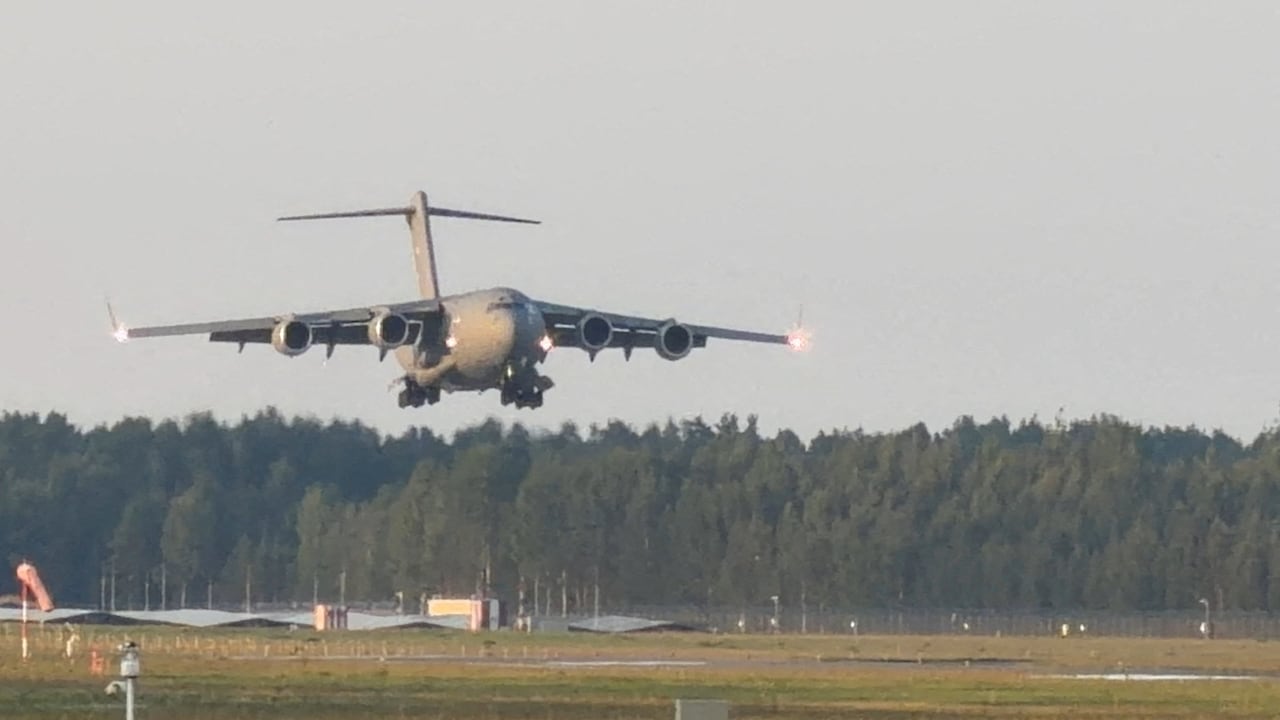
A C-17 Globemaster, thought to be carrying CIA Director John Ratcliffe, lands near Riga, Latvia, on August 25, 2026, in this frame captured from a social media video. (AlfredSpodins/X/Reuters)
But what specific message was Ratcliffe intending to communicate?
Initially, the Wall Street Journal suggested that the mission served as a direct ultimatum to Putin: cease the escalating hybrid warfare against NATO’s eastern border or face a direct allied response.
Military strategists have long speculated that Putin might attempt to provoke the United States or NATO into direct involvement in the war to secure a favorable resolution in Ukraine. A minor incursion into a small Baltic nation could serve as a provocation to test NATO’s Article 5 collective defense clause.
However, the following day, Trump appeared to dismiss these concerns, stating he was not worried about a Russian attack on NATO and describing Ratcliffe’s trip as “semi-routine.”
Shortly thereafter, the New York Times reported an account similar to Trump’s, suggesting that NATO was not the primary focus of the meeting; instead, the warning was directed at Putin to conclude his war in Ukraine before Russia’s economic and military situation deteriorated further.
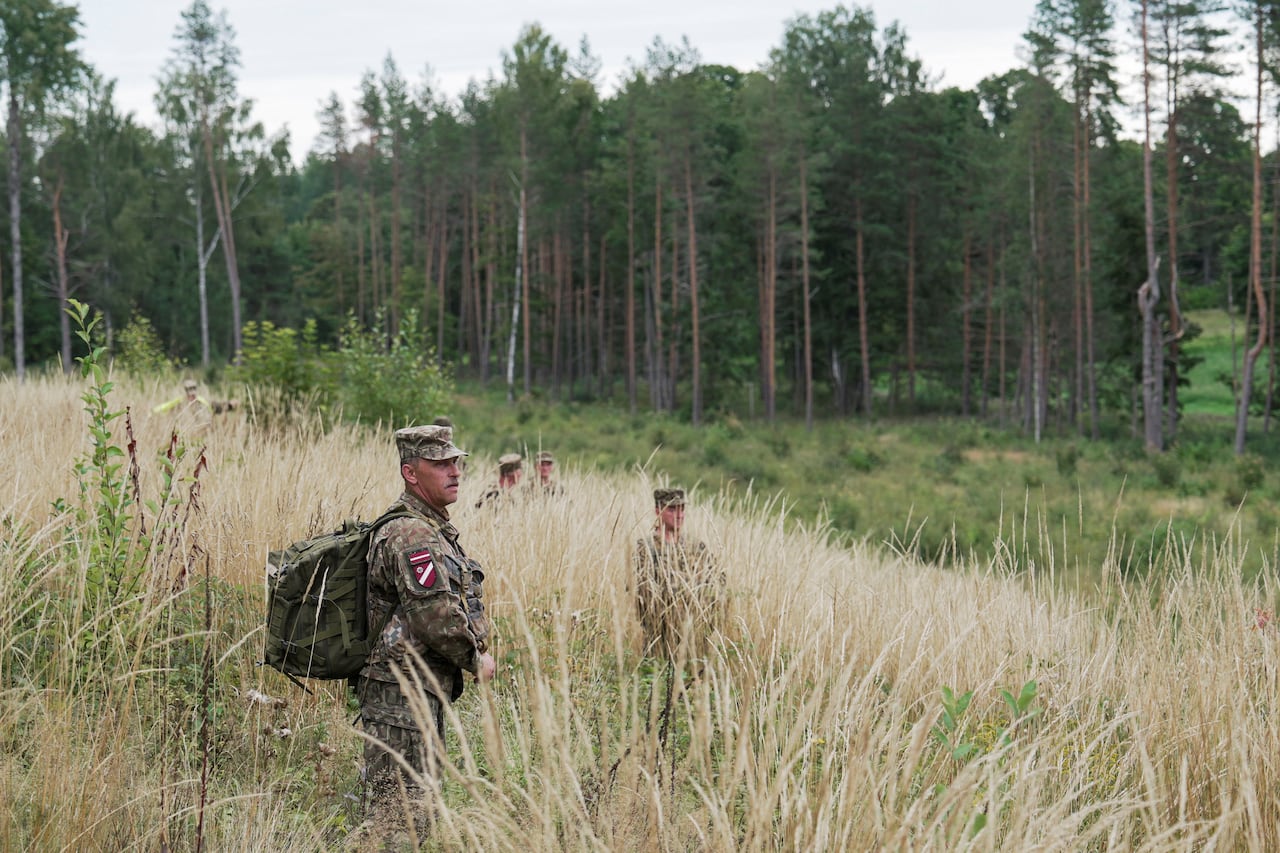
Servicemen of the Latvian National Guard search a field for debris from an intercepted drone in Rugaji, Latvia, on August 14, 2026. (Janis Laizans/Reuters)
Canada on the Frontlines
Canada’s largest international military deployment is situated in the Baltics, where more than 2,000 soldiers are stationed in Latvia with the mission of deterring any Russian aggression.
Canadian military and security expert Wesley Wark does not believe Putin is inclined to provoke NATO directly, even amid the U.S.’s political and military vulnerabilities due to the ongoing conflict in Iran.
“I think concerns regarding Article 5 are exaggerated,” Wark conveyed to CBC News via email. “My primary assumption is that Ratcliffe visited Moscow to convey a message about the seriousness with which the U.S. plans to implement economic sanctions against Iran and to caution Russia against interference.”
Russia is a significant military supporter of Iran, and Putin’s government may be providing Iran with targeting intelligence to assist in strikes against U.S. military bases in the Persian Gulf.
The immediate response to Ratcliffe’s visit from nations like Latvia also downplayed the risk of a NATO confrontation. The country’s foreign minister shared on social media that “Latvia’s threat assessment remains unchanged.”
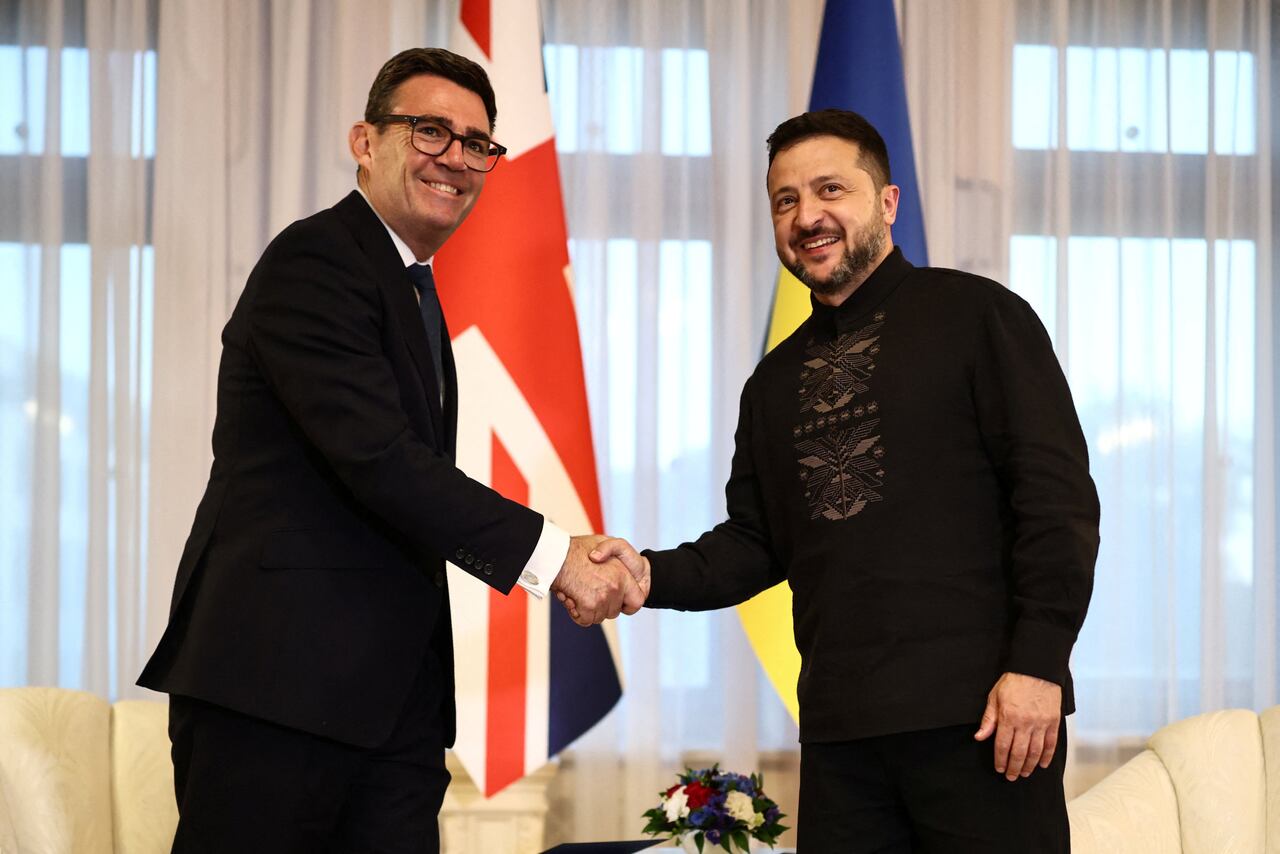
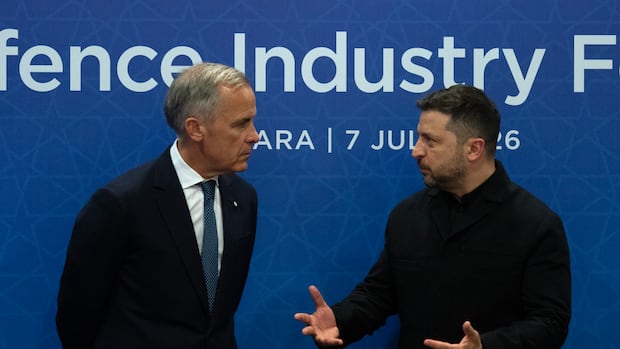
Ukraine’s President Volodymyr Zelenskyy greets British Prime Minister Andy Burnham before their bilateral meeting at Horodetskyi House in Kyiv, Ukraine, on August 24, 2026. (Henry Nicholls/Reuters)
In Britain—where Putin’s operatives have infamously conducted attacks previously, such as the lethal 2018 Novichok incident in Salisbury—intelligence agencies have cautioned that sensitive sectors within the defense industry should remain vigilant.
On Wednesday, Russian foreign ministry spokesperson Maria Zakharova issued direct threats, indicating that Russia may target sites within and beyond the U.K. should the British government continue its support for Ukraine.
During his recent trip to Kyiv, Prime Minister Andy Burnham announced he would provide Ukrainians with plans to develop their own long-range missiles capable of striking deep within Russian territory.
Assault on Ukraine
Ukrainian officials seem to believe that the potential Russian threats against NATO, the U.K., and other European targets are merely diversions, and that when Putin escalates, the primary focus will be on Ukraine.
“I believe Putin sees an opportunity,” expressed Yuriy Boyechko, who heads the U.S.-based Hope for Ukraine, a humanitarian group providing emergency supplies to the country amid the conflict.
“I think Putin intends to inflict suffering and despair on Ukrainian society this winter through energy shortages and food scarcity… hoping that they [Ukrainians] will turn against their government.”
Although Putin’s plans could lead to significant hardship for Ukraine in the upcoming months, he maintains that it will fail to crush the nation’s spirit.
“Historically, none of his strategies have succeeded. Therefore, I remain hopeful,” he stated.
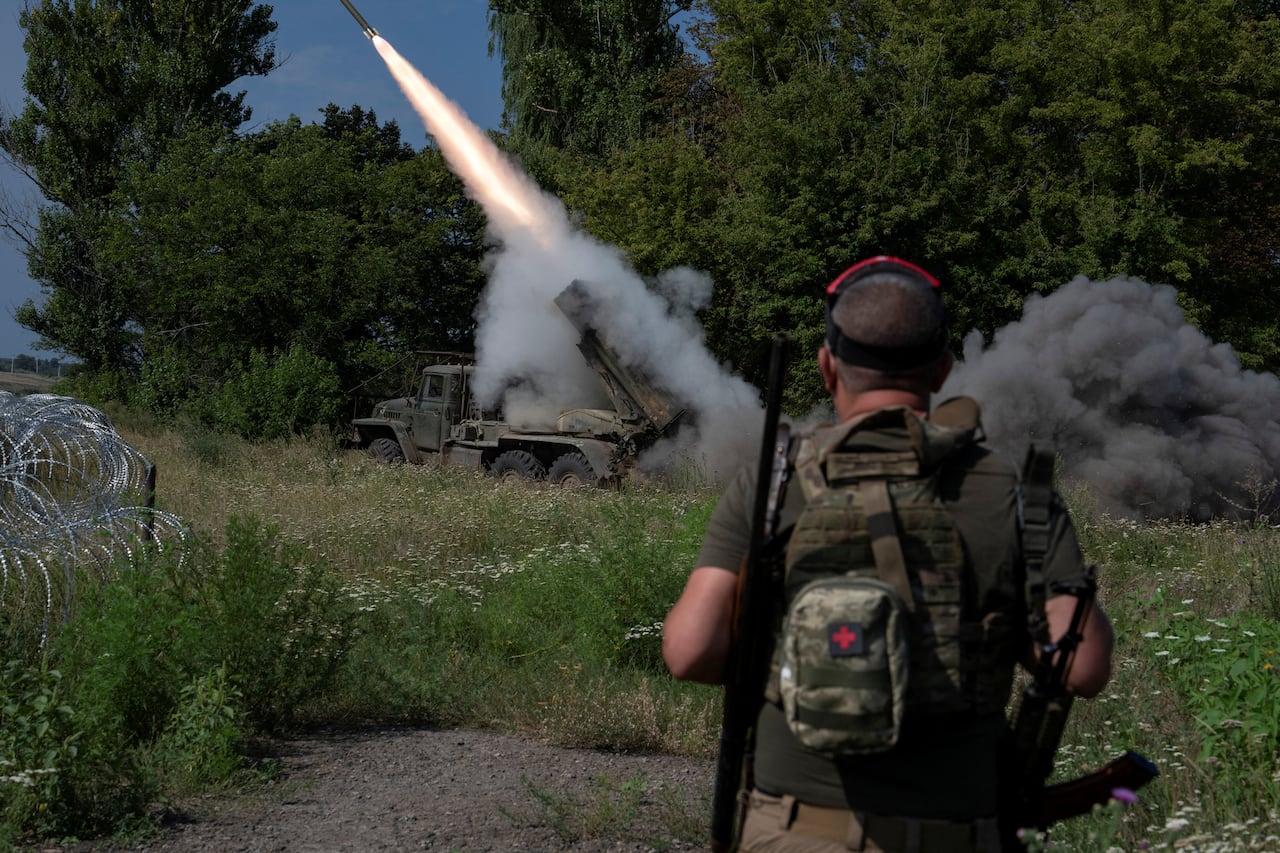
Servicemen of the 93rd Kholodnyi Yar Separate Mechanized Brigade of the Ukrainian Armed Forces launch a BM-21 Grad multiple rocket system at Russian troops near the frontline city of Kramatorsk, Ukraine, on August 4, 2026. (Iryna Rybakova/Press Service of the 93rd Kholodnyi Yar Separate Mechanized Brigade of the Ukrainian Armed Forces)
The intensity and severity of missile strikes on Kyiv and other urban areas have escalated recently, with reports of up to 800 Russian drones being deployed in a single night.
The lack of interceptor missiles, such as the U.S.-made Patriots, has rendered cities vulnerable, resulting in a rise in civilian casualties.
Boyechko believes that as Ukrainian cities face this onslaught, Putin will employ his newly mobilized recruits to attempt to breach the country’s defenses in the southern regions.
“His goal is for those 600,000 new troops to break through the frontlines and seize additional territory. He is not merely focused on Donetsk, Luhansk, or Zaporizhzhia—he aims to reach all the way to Kyiv.”
Perilous Mobilization
Putin reportedly anticipated that the invasion he initiated in February 2022 would be completed in a matter of days and that Kyiv would easily capitulate. Contrary to this expectation, Western estimates indicate that Russia has endured up to 1.4 million casualties, encompassing those who are killed, injured, or missing.
A mass mobilization carries significant risks for Putin, according to Howard from Saratoga. Such a move would likely be very unpopular and could trigger a new wave of emigration from the country. Additionally, civilian industries and agriculture could suffer from a lack of workers necessary to sustain basic supply chains and support Russia’s wartime economy.
“He might consider generating forces gradually,” Howard suggested.
Regardless of whether Ratcliffe’s recent journey was aimed at bolstering NATO, securing the Baltics, or isolating Iran, the harsh reality on the ground indicates that Ukraine will bear the brunt of whatever strategy Putin opts for.