



During the summer months, dense algal blooms flourish in the lakes of Saskatchewan, and Denhyn Holowatuk views this as a promising opportunity for biofuel production.
Having recently earned a diploma in agriculture and food production from Saskatchewan Polytechnic, Holowatuk is gathering algae from lakes in southern Saskatchewan and experimenting with methods to transform it into ethanol, a sustainable fuel.
“I’m using seaweed along with sugar and vinegar in a fermentation process,” Holowatuk explained.
“This essentially produces alcohol, which can then be processed with high heat and water to extract the biofuel or alcohol from the fermentation.”
Holowatuk began collecting algae from the shores of a lake for his family during his childhood. Eventually, he expanded this activity to assist other visitors and property owners, turning it into a small business during the summer.
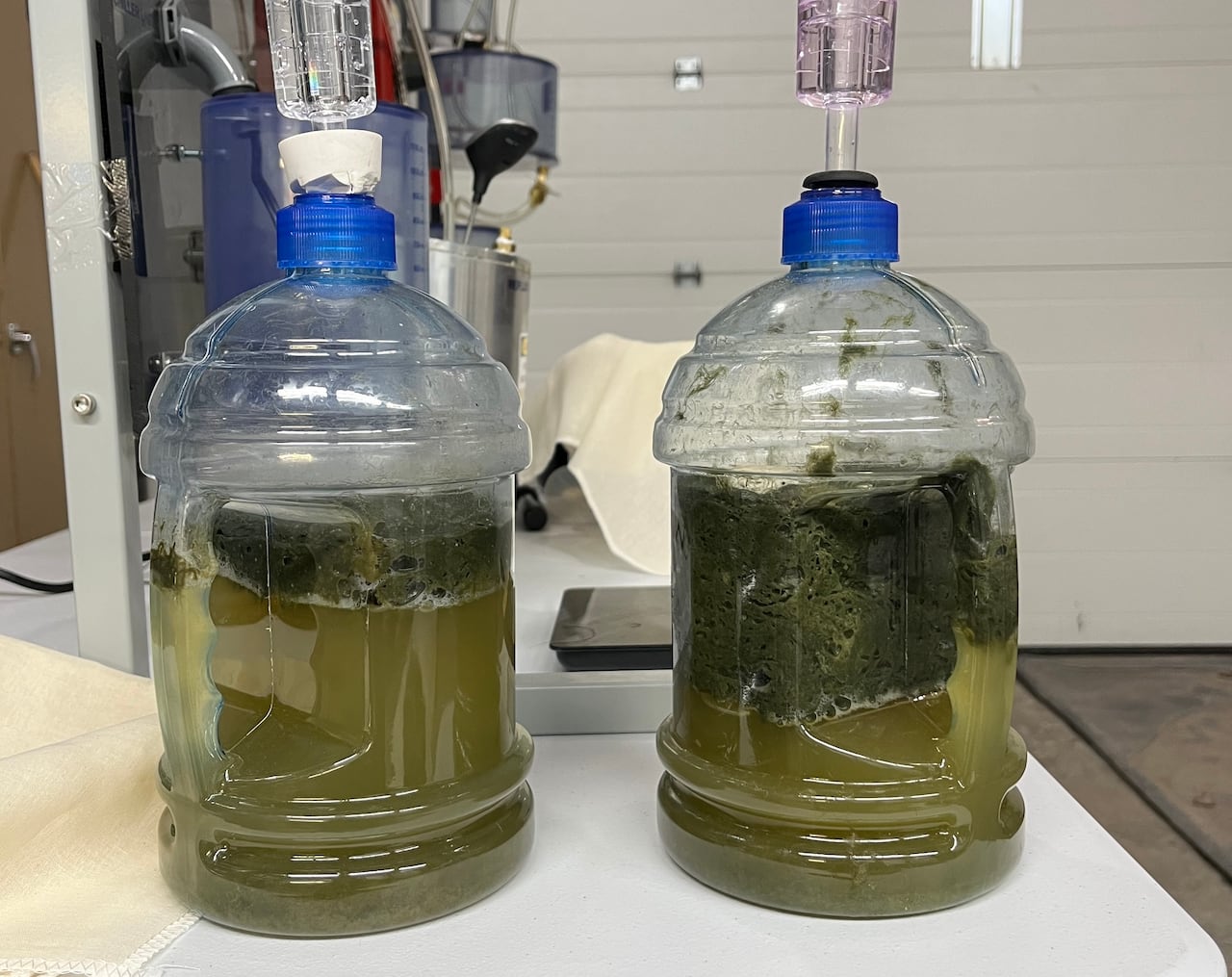
Holowatuk collaborates with Sask. Polytech’s Sustainability-Led Integrated Centres of Excellence (SLICE) within the Faculty of Technology and Skilled Trades to explore the fermentation and distillation of algae into ethanol. (Submitted by Denhyn Holowatuk)
While completing his capstone project at Sask. Polytech, he began investigating alternative methods for disposing of algae.
At that time, his objective was to create organic fertilizers through a fermentation process akin to brewing beer or distilling vodka.
“Then, one of my teachers reached out to me and suggested I meet with him. We concluded that we could potentially use this algae as a fuel source.”
Graeme Drysdale, who holds the research chair for sustainable energy solutions at Sask. Polytech, was investigating ways to convert food crops into ethanol when he got in touch with Holowatuk.
“I thought, can we utilize the algae you’ve gathered?” Drysdale recounted. “This could lower costs; essentially, you’re being compensated for removing it.”

Graeme Drysdale serves as the research chair for sustainable energy solutions at Saskatchewan Polytechnic and has been collaborating with Holowatuk on this research initiative. (Daniel Birru/CBC)
Drysdale mentioned that he attended the Hannover Messe industrial trade fair in Germany, where he discussed algae biofuels with various professors and researchers.
“They indicated, ‘We’ve experimented with it. It’s not economically viable; it’s costly,’” he noted.
What’s the procedure?
A research group at the University of Utah developed a novel jet mixer in 2019 that extracts fuel from algae while consuming significantly less energy compared to traditional methods.
According to a statement from the university, this advancement has brought this energy source closer to becoming a feasible and affordable alternative fuel suitable for commercial application.
In Mexico, a separate initiative led by engineer Miguel Ángel Aké Madera is converting sargassum, another variety of seaweed, into biofuel. His company, ‘Nopalimex,’ is scaling up operations.
The company’s website states that the project aims to process as much as 600 tons of algae daily.
Holowatuk’s endeavor is now focused on determining whether this approach can be sustainable and economically viable over the long term.
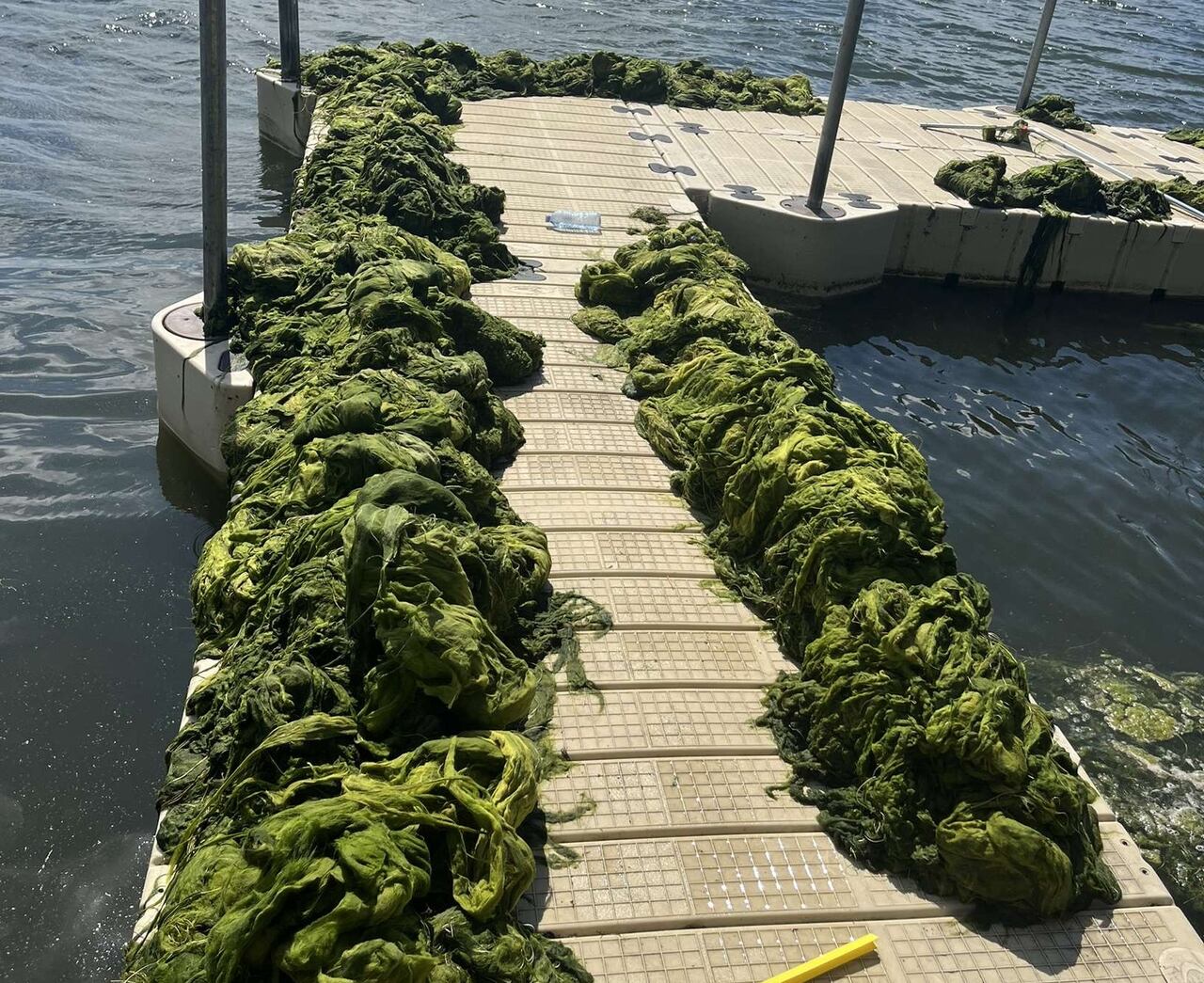
Holowatuk is accumulating a supply of seaweed to advance the research throughout the winter months. (Submitted by Denhyn Holowatuk)
Currently, they are gathering a stock of seaweed to facilitate ongoing research during the winter.
The primary challenge lies in the collection capacity, but Holowatuk aims to obtain more sophisticated equipment in the future to enhance efficiency.
“Lake visitors should recognize that efforts are being made to find a solution for this algae, and hopefully, a long-term answer can be discovered.”