



You Can See Everything is the film that has everyone buzzing but many are eager to avoid spoilers.
This might explain the surge of moviegoers who flocked to theaters during its opening weekend to catch the nearly three-hour documentary focusing on Elizabeth Holmes, the founder of Theranos and a convicted fraudster.
Regardless of the reason, the film grossed over $15 million in ticket sales in its first weekend—marking it as the second-highest opening weekend for a non-musical documentary in U.S. box office history, surpassed only by Fahrenheit 9/11 from 2004.
This is a significant milestone, especially considering that You Can See Everything was released in only 855 theaters across Canada and the U.S.
Following its release, the reviews were largely favorable: it holds a 99 percent fresh rating on Rotten Tomatoes and achieved a remarkable 4.8 on Letterboxd, making it the highest-rated film ever on the platform. (Although both ratings have seen a slight decrease since then.)
As five-star reviews flooded in, so did the reactions:
“I was literally speechless for most of the last two hours,” commented Letterboxd user James (Schaffrillas).
“An absolutely mind-blowing, surreal documentary,” stated user vgoodatkissing.
Read on without spoilers
The documentary’s concept is simple. A film crew featuring co-directors and producers Nathan Fielder and Lance Oppenheim spends time with Holmes, her partner Billy Evans, and their children, capturing their lives just 34 days before she is set to begin an 11-year prison term for fraud.
Toronto film critic Teri Hart described watching You Can See Everything in theaters as a deeply engaging experience.
“Audiences were physically leaning toward the screen,” she shared with CBC News. “There were moments of gasping. People clapped at the film’s conclusion, and there was plenty of laughter.”
“When you exit this film, you are left wondering whether to discuss Nathan Fielder, Elizabeth Holmes, Billy, or even the filming process itself — where the cameras were placed.”
The trailer provides viewers with a sneak peek into the unique relationship between Fielder and Holmes.
“Nathan Fielder embraces awkwardness. He is unafraid to ask questions in a way that is truly distinctive,” noted Hart. “He possesses a provocative style that is captivating to witness.”

Boundary-pushing directors Nathan Fielder and Lance Oppenheim documented Holmes’s life during the 34 days before she started serving her prison sentence for defrauding investors. (A24)
“Pair him with Elizabeth Holmes, who also communicates in a distinct manner, and the result is magical.”
Indeed, the documentary excels in delivering intense and intentionally uncomfortable interviews, a hallmark of Fielder, a Canadian originally from Vancouver, known for his work on Nathan for You, along with his innovative take on reality.
Hart describes the documentary as a cinematic experience that few have encountered—one that might prompt audiences to reconsider their perceptions of truth.
A24’s latest triumph
You Can See Everything was partly produced and distributed by A24, the studio behind some of this year’s most discussed films, including Olivia Wilde’s The Invite, the biopic Tony about Anthony Bourdain, and the record-breaking horror movie Backrooms.
“A24 has established a brand that resonates. In my view, this brand revolves around collaborating with auteurs, working with writer-directors or directors who possess a clear vision and a strong artistic identity,” Hart explained.
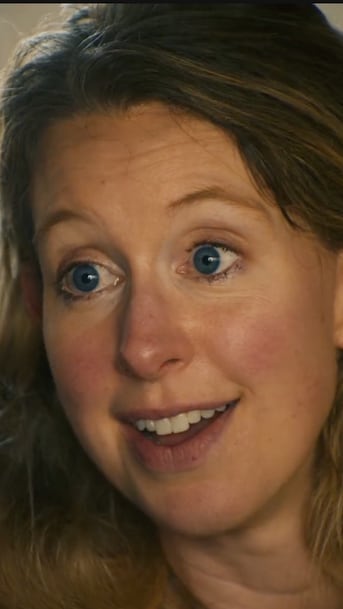
Nathan Fielder’s You Can See Everything gazes into the abyss of Elizabeth Holmes.
The documentary about the jailed Theranos founder examines the absurd nature of truth.
She remarked that this has enabled A24 to make a significant impact as the company counters the prevailing notion that Hollywood is devoid of fresh concepts.
As a cinema enthusiast, Hart expressed her appreciation for anything that encourages audiences to return to theaters and engage in discussions about what they have viewed. She believes You Can See Everything epitomizes that sentiment.
“People are leaving the theater astonished and full of various thoughts, ideas, and inquiries. It’s essential to note that this film does not provide neat conclusions. It certainly does not, leading to many questions.
“I think that creates a thrilling experience for viewers to share with others.”