



Fans of Nathan Fielder, known for his work as a comedian and performance artist, might find themselves better equipped to handle the revelations in his documentary about Elizabeth Holmes, You Can See Everything.
After witnessing Fielder turn a standard interview in his show Nathan for You into a humorous moment about consuming his grandson’s urine or reimagining a Harry Houdini-style escapade into evading the label of a registered sex offender, audiences might approach this new project with a more nuanced outlook.
However, even the most devoted followers of Fielder may struggle to anticipate the unique experience awaiting them, as he moves in with Holmes and her partner, Billy Evans, just before she begins her 11-year sentence for defrauding investors with her malfunctioning blood testing technology.
It’s not solely the discomforting situations Fielder orchestrates that are challenging; it’s also the prolonged stares exchanged between him and the earnest-eyed founder of Theranos, as he presses her to reveal her motivations for her actions.
You can summarize the overarching themes. You might say, in a somewhat cryptic manner, that You Can See Everything strives to expose every aspect of an individual while simultaneously highlighting how perplexing and elusive even the most straightforward details about a person can be. Its stunning cinematography and bizarre scenarios meld to create a documentary that feels more tightly constructed than a standard drama.
Moreover, it appears that the film’s genuinely distinctive creativity undermines the very notion of documentary filmmaking. Instead of clarifying Holmes’ identity, Fielder illustrates that the more one observes—especially when documenting complex, inscrutable people—the less clarity one achieves.
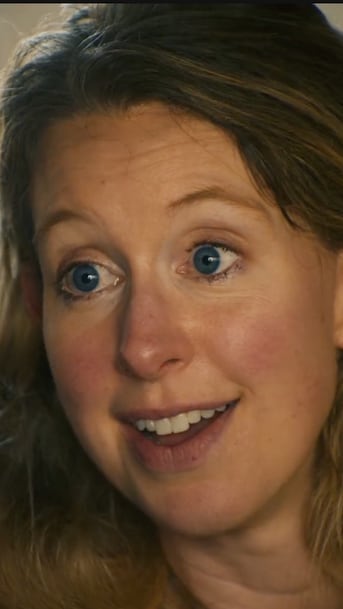
Nathan Fielder’s You Can See Everything gazes into the abyss of Elizabeth Holmes.
The documentary about the jailed Theranos founder examines the absurd nature of truth.
However, the most challenging aspects to navigate are the specifics; the eagerly awaited twists and turns that disrupt audience expectations regarding how documentary storytelling can operate, rather than providing new, substantive insights about the incarcerated woman.
As critics were advised in a personal video by Fielder and co-director Lance Oppenheim, the visceral discomfort and eye-opening revelations in You Can See Everything stem from its unpredictability. Viewers may enter expecting a typical talking-head documentary on corporate wrongdoing, but are soon confronted with nudity, AI representations, and unexpected celebrity appearances.
Watching You Can See Everything does not lead to explosive new revelations about the potentially dubious arrangements that surrounded Holmes’ establishment of Theranos, the healthcare firm that claimed to develop technology capable of diagnosing numerous diseases with a single drop of blood.
The public had already been captivated by Holmes through depositions, court hearings, and her trial (which resulted in her current prison sentence), as well as the award-winning series The Dropout.
Ultimately, many concluded that she was akin to another aspiring Steve Jobs. Yet, unlike Jobs, she chose to misrepresent her product’s capabilities, hoping it would eventually function and generate profits.
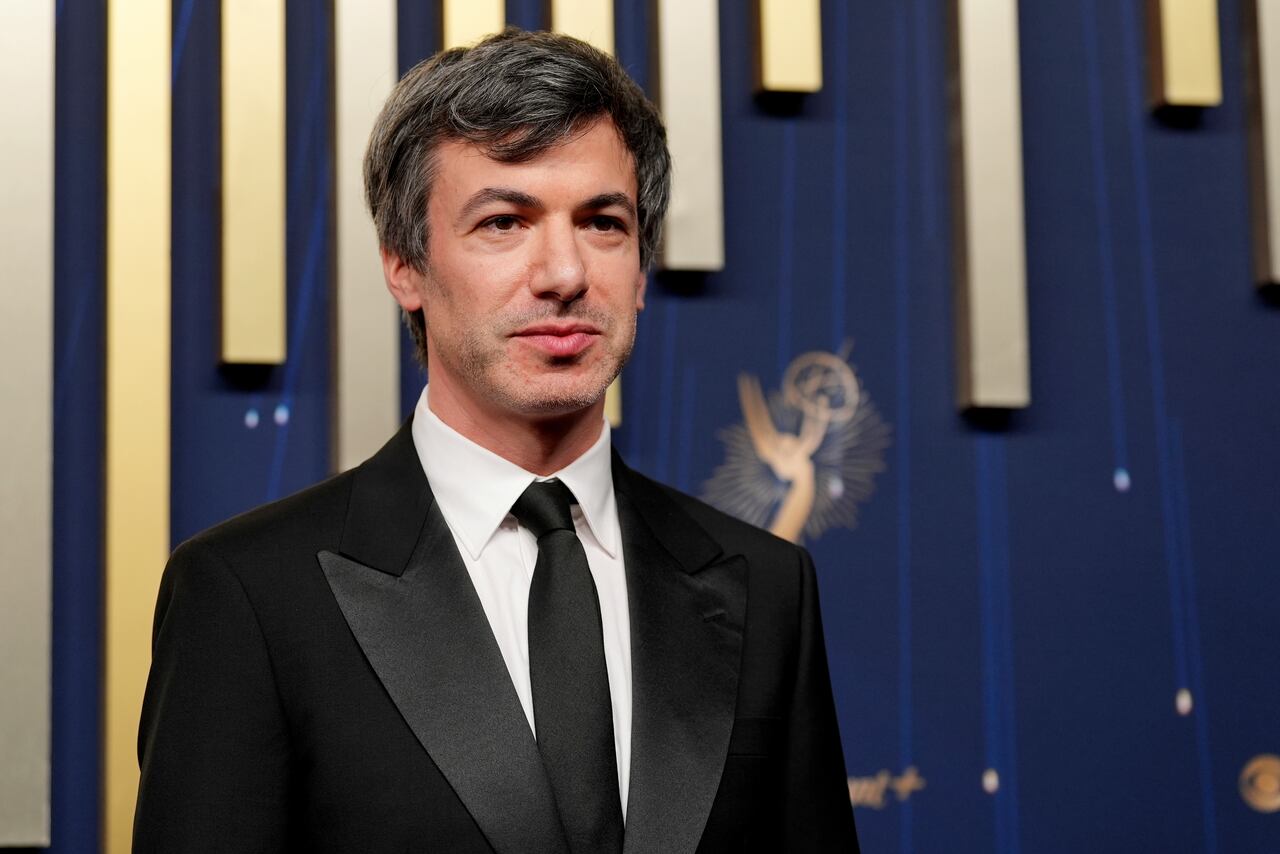
Nathan Fielder arrives at the 77th Primetime Emmy Awards on Sunday, Sept. 14, 2025, at the Peacock Theater in Los Angeles. (Jae C. Hong/The Associated Press)
As it turns out, Fielder’s presence is justified by Holmes and her stage-mom-like fiancé, Evans.
They believe the issue lies in the public’s lack of understanding of the real Holmes, as a barrage of misleading headlines and misrepresented details have crafted a narrative far from reality.
If only Fielder could uncover the true essence of Holmes, they surmise, they could resume their endeavors. Those endeavors primarily involve, as we soon discover, the launch of Theranos 2.0 (now featuring lasers, astonishingly).
Fielder’s cautionary note resonates: What happens if he uncovers something Holmes wishes to keep hidden? In a wide-eyed moment reminiscent of Pinocchio, Holmes insists she has nothing to conceal.
As Fielder’s inquiries deepen, numerous startling discoveries emerge, including a surprisingly comical antagonist.
We observe Fielder delving into the strange domestic life of Holmes and Evans (they reportedly favor bed frames without mattresses and have distinct views on egg-beating techniques). Additionally, we see him explore the complexities of Holmes’ thoughts (most notably in a segment that meticulously dissects an Abbott and Costello routine).
Yet, more captivating than the enigmatic enigma of Holmes’ mind is Fielder’s own. Similar to his other projects that probe the vulnerabilities of “reality” television, You Can See Everything heavily relies on Fielder’s struggle to comprehend, interpret, and portray reality.
As he searches for an elusive absolute truth, the camera frequently shifts back to him: sitting in a Spielberg-like shadow, engaging in increasingly convoluted efforts to reach his subject, who is now incarcerated, or—most absurdly—in a twist that challenges the very impetus behind creating a documentary.
-
Audio
Weekly Wrap: Primetime and The History of Concrete
-
Director Alex Gibney on terrifying Musk documentary: ‘It’s not a funeral; it’s a warning’
This all feels cryptic. Yet, without revealing too much, it’s evident that the more ludicrous and artificial strategies Fielder employs, the more the focus shifts toward him rather than Holmes. Much like the recent documentary sensation The History of Concrete (in which Fielder also makes an unexpected cameo), the intended subject of the documentary becomes less significant as the narrative progresses.
Ultimately, it evolves into an exploration of the art of documentary filmmaking itself. However, while The History of Concrete devolved into a critique of the bleak world of documentary production—securing funding, crafting pitches, and telling a story one doesn’t fully grasp until the end—You Can See Everything scrutinizes its objectives.
What constitutes objectivity, and where does the defense of truth blur with the defense of an individual’s perception of truth? What drives the desire to uncover a complete, realized truth about something—and is the feeling of achieving this at the conclusion of documentaries misguided or potentially harmful? What distinguishes fiction from “reality” entertainment, and how far can the boundaries be stretched before one transforms into the other?
These are questions that Fielder appears to raise as he navigates Holmes’ life, crafting a documentary that is so stylized and direct it hardly resembles a traditional documentary.
In conclusion, it seems more like something unfamiliar and bizarre: a form examined and scrutinized so closely that it loses its familiarity. Regarding both Fielder’s subject and his method, it represents the closest semblance of truth we may ever attain.