



The breakdown of trade negotiations between Ottawa and Washington may prompt U.S. negotiators to aggressively pursue a favorable outcome with Mexico in their ongoing discussions, according to a former trade negotiator from Mexico.
Kenneth Smith Ramos, who served as Mexico’s lead technical negotiator during the initial Canada-U.S.-Mexico Agreement (CUSMA) negotiations from 2017 to 2019, anticipates that the U.S. will attempt to establish a framework agreement with Mexico by the year’s end, delaying the resolution of more contentious issues, such as Mexican agricultural export restrictions, until 2027.
“There is a chance that in the forthcoming [negotiating] rounds, weeks or months … the U.S., for political reasons, similar to its approach with the European Union … could announce, ‘we have a framework agreement,'” Smith Ramos stated in an interview with CBC News, where he is a partner at Agon, a corporate consulting and legal services firm based in Mexico City.
“I see this as a likely scenario.”
-
Exclusive
Trump’s top trade negotiator disputes Canadian assertion that U.S. made last-minute demands
-
Canada, U.S. far apart on tariff deal as deadline looms: sources
Both Canada and Mexico are engaging with the U.S. separately to resolve tariff and other specific bilateral trade issues, with hopes of solidifying agreements prior to entering trilateral discussions aimed at amending and extending CUSMA.
Negotiations between Canada and the U.S. collapsed on August 21 when Prime Minister Mark Carney withdrew his negotiating team to Ottawa. Carney indicated that the U.S. had introduced last-minute demands regarding cultural issues, automotive matters, and sovereignty that Canada found unacceptable.
These discussions aimed to avert a U.S. threat of imposing 50 percent tariffs on a broad range of Canadian products, affecting approximately $27 billion worth of goods.
In response, Canada has implemented dollar-for-dollar counter-tariffs on over 700 different U.S. imports, which will take effect on September 8.
According to Smith Ramos, the Canada-U.S. trade conflict has now indefinitely postponed any trilateral discussions on advancing CUSMA.
“The future regarding these tariffs and threats is uncertain,” he stated.

Kenneth Smith Ramos was Mexico’s former chief technical negotiator during the initial 2017 to 2019 CUSMA negotiations. (Submitted by Kenneth Smith Ramos)
On July 1, the U.S. announced it would not extend the CUSMA agreement and preferred to renegotiate the deal’s terms.
Both Canada and Mexico expressed interest in extending the agreement, firmly believing that the continental trade pact benefits all three nations.
Marcelo Ebrard, Mexico’s Secretary of Economy, remarked to reporters on Thursday that the ongoing tensions between Canada and the U.S. do not “benefit” Mexico, emphasizing the need for all parties to find common ground and progress.
“We hope they can reach an agreement; they were very close just a few days ago,” Ebrard noted, as he prepares to head to Washington, D.C., next month for another round of bilateral discussions.
“The North American region must integrate; we need to collaborate in some capacity, and we anticipate this will happen, but it’s difficult to predict when.”
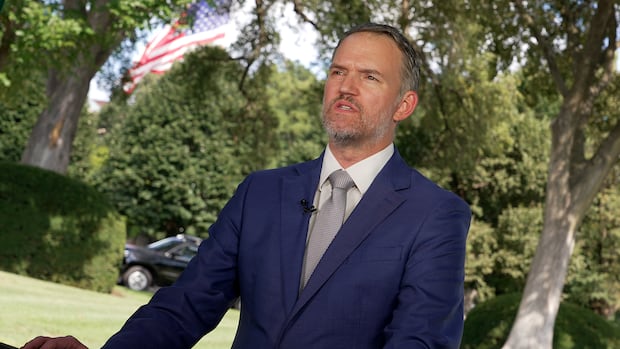
U.S. Trade Representative Jamieson Greer told CBC News that Canada was responsible for the collapse in talks and denied Ottawa’s claims that last-minute U.S. changes scuttled a deal. Meanwhile, the premiers of Ontario and Saskatchewan weighed further retaliatory action.
When questioned about the trade tensions between Canada and the U.S. earlier this week, Mexican President Claudia Sheinbaum chose her words with care. Sheinbaum had a conversation with Carney on August 20, just one day before the prime minister halted trade discussions.
“I spoke with Prime Minister Carney on Thursday. I believe that this breakdown hadn’t occurred yet. I prefer not to label it a breakdown; it’s more accurate to call it a disagreement in negotiations,” Sheinbaum stated during her Monday morning press briefing.

Mexico Secretary of Economy Marcelo Ebrard, left, walks with Canada-U.S. Trade Minister Dominic LeBlanc in Toronto on May 6, ahead of the launch of a Mexican trade mission to Canada. (Mexico Secretariat of Economy)
The Sheinbaum administration must navigate the situation with care while addressing its own unresolved issues in trade discussions with the U.S., according to Solange Marquez, vice-president of policy at the Canadian Council for the Americas.
“They are trying to avoid any contamination of the dialogue or their discussions with what is transpiring with Canada,” Marquez remarked.
“From Mexico’s perspective, there is a growing concern about angering U.S. authorities. … With Canada out of the negotiations, Mexico is focused on safeguarding its own interests.”
A ‘weird Frankenstein deal’
Marquez expressed the view that the age of free trade in North America may have come to an end.
“Currently, there is no discussion of a free trade agreement. We are negotiating tariffs and a new trade agreement without the term ‘free’ included,” she commented.
“We are negotiating within a trilateral agreement framework, but in reality, we are witnessing two separate bilateral agreements.”

Solange Marquez, vice-president of policy with the Canadian Council for the Americas, stated that the Sheinbaum administration must navigate the situation carefully. (Courtesy of Solange Marquez)
Mexican journalist Alex González Ormerod, executive director of The Mexico Political Economist, suggested that CUSMA “might transform into a peculiar Frankenstein deal where Mexico and Canada opt out of various provisions imposed by the U.S.”
González Ormerod mentioned that sources within the Mexican government have indicated that the U.S. has made “outrageous demands” during their bilateral discussions.
“It seems Canada is the first to react, but it’s not the first to face an unfavorable deal with the expectation that parties will concede,” he explained.
“The Mexicans are adept at maintaining a soft approach while resisting the most unreasonable demands, unlike the Canadians, who have deemed such offers too humiliating or insulting.”
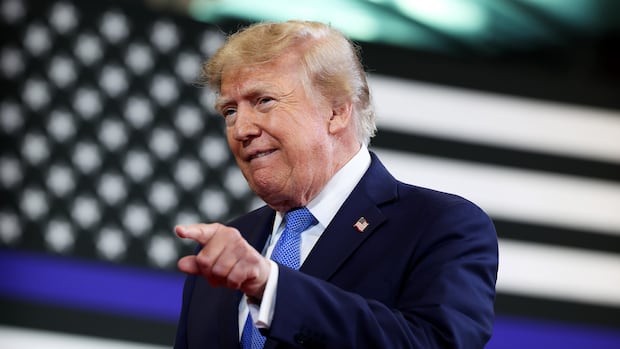
As businesses navigate the uncertainty of U.S. tariffs, trade policy experts caution that Canada might be at risk of being outmaneuvered during negotiations, suggesting that Prime Minister Mark Carney’s team should consider adopting strategies similar to Mexico’s.
Time to leave the U.S. out of it?
Both Marquez and González Ormerod emphasized the need for Canada and Mexico to strengthen their trade relations independently of the U.S.
Although both nations have shown interest in enhancing their connections through various trade missions this year, the significant influence of the U.S. hampers the potential for a genuine Canada-Mexico partnership, they noted.
“The issue is that Mexico and Canada tend to view each other through the lens of Washington,” observed Marquez.
“Perhaps the trade relationship between Mexico and Canada would improve significantly if we engaged with each other as equals rather than through the prism of the United States,” González Ormerod concluded.